

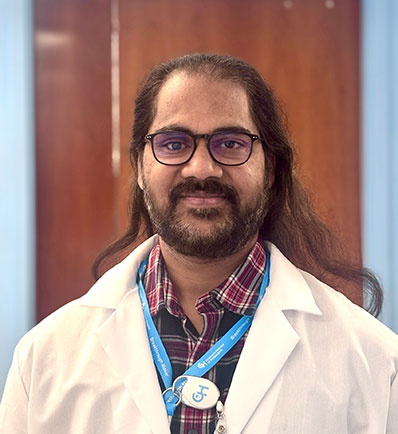
Research Associate Scientist
My scientific training spans clinical metabolomics, protein misfolding and amyloid diseases, bacterial structural biology, and cryo-electron microscopy (Cryo-EM). During my master’s training at the All India Institute of Medical Sciences (AIIMS), New Delhi, I conducted proton NMR-based metabolomic studies of inflammatory bowel disease. I earned my Ph.D. in Biochemistry, Biophysics, and Structural Biology from the National Institute of Immunology (NII), India, where I investigated the molecular mechanisms of transthyretin amyloidosis and identified small-molecule inhibitors that suppress amyloid formation. Supported by the prestigious D.S. Kothari Postdoctoral Fellowship, I subsequently examined the cytotoxic mechanisms of transthyretin amyloid intermediates, providing further insights into amyloid-mediated cellular toxicity.
As a postdoctoral fellow at the Okinawa Institute of Science and Technology (OIST), Japan, I expanded my expertise in Cryo-EM by investigating bacterial chemosensory arrays and developing advanced structural biology workflows. I later served as a Senior Research Associate in the Department of Biochemistry at Duke University School of Medicine, where I employed Cryo-EM, mass photometry, single-molecule biophysics, and complementary biochemical approaches to investigate the molecular mechanisms regulating bacterial transcription and translation.
In the Sgourakis Laboratory, I aim to leverage my multidisciplinary background in structural biology, biophysics, and molecular mechanisms to uncover the structural basis of immune recognition, antigen presentation, and T cell activation. By integrating advanced structural and biophysical approaches, I seek to elucidate how dynamic molecular interactions govern adaptive immune responses, with the long-term goal of advancing the development of next-generation immunotherapies and vaccines.