

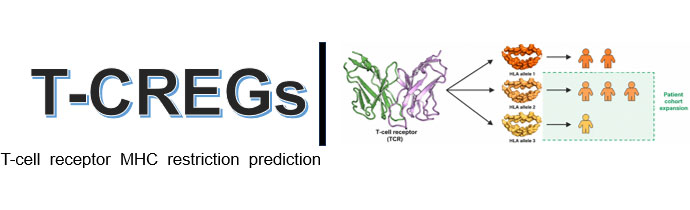
T-cell receptor MHC restriction prediction
T-CREGs is a computational tool designed to predict the major histocompatibility complex (MHC) restriction of T-cell receptors (TCRs). By identifying potential MHC restrictions, T-CREGs supports the characterization of TCR recognition and provides insights into T-cell specificity and immune responses.
https://github.com/titaniumsg/find_tcreg
Human leukocyte antigen structural database
HLA3DB is an automated, curated database of peptide–MHC class I (pMHC-I) structures collected from the Protein Data Bank (PDB). The database provides structural annotations and classifications of peptide backbone conformations, enabling researchers to explore structural similarities across HLA allotypes. HLA3DB facilitates the investigation of peptide presentation, antigen recognition, and T-cell cross-reactivity.
https://hla3db.research.chop.edu
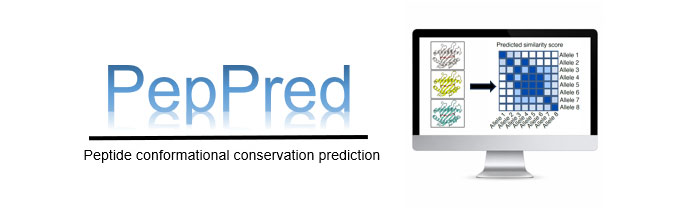
Peptide conformational conservation prediction
PepPred is a computational framework for predicting the conformational conservation of antigenic peptides presented by different MHC class I allotypes. By assessing similarities in peptide backbone conformations across HLA molecules, PepPred helps researchers investigate structural features associated with antigen presentation and potential T-cell cross-reactivity.
https://github.com/rampantula/peppred
Automated methyl assignment of NMR NOESY data
MAUS is a computational tool for automated methyl resonance assignment using nuclear magnetic resonance (NMR) Nuclear Overhauser Effect Spectroscopy (NOESY) data. It facilitates the assignment of methyl groups in proteins by integrating experimental NMR information with structural data, reducing the need for manual analysis and supporting NMR-based studies of protein structure and dynamics.